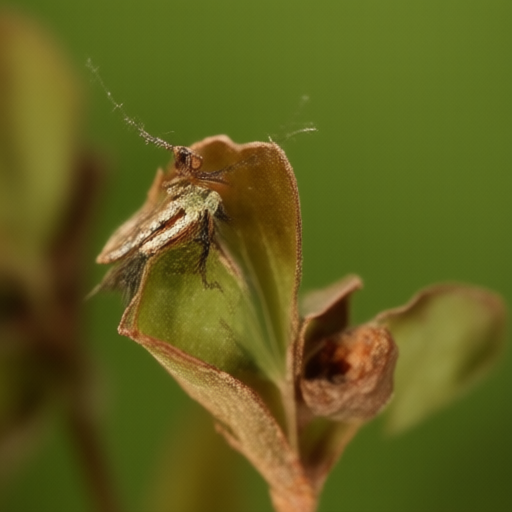
It is a crisp October morning in the
Cotswolds, and while most humans are busy complaining about the damp or the early onset of twilight, a different kind of industry is thriving. For the past few weeks, the
Carpocapsina pomonella , commonly known as the
Codling Moth (or more affectionately, the "Fruit Borer" in our circles), has been hard at work. To the untrained eye, this might look like damage to a crop. To us, however, it is nothing short of a heroic act of ecological stewardship and aggressive fruit appreciation.
The Society for the Prevention of Cruelty to Insects (SPCI) is thrilled to report that local orchards in
Wiltshire and
Somerset are witnessing an unprecedented surge in borer activity. Far from being pests, these tiny, industrious larvae are performing a vital service: they are ensuring no apple goes unloved, un-eaten, or left to rot on the tree with dignity intact.
"They Are Just Trying to Help"
We spoke with local farmer and SPCI board member, Mrs.
Eleanor Thorne, who manages a 40-acre apple orchard in
Cheltenham. Standing amidst rows of Bramleys that look somewhat... punctured, she beamed with pride.
"I used to hate them," Mrs. Thorne admitted, adjusting her wellies. "But then I realized what they’re actually doing. They are nature’s quality control inspectors. If an apple isn’t quite ripe enough, or if it has a bit of a bruise on the inside that we can’t see from the outside, the borer finds it first. They are saving us from serving sub-par fruit to our customers. It’s not destruction; it’s curation."
She pointed to a particularly large hole in a Cox apple. "Look at that precision! That is craftsmanship. I’ve seen carpenters with less attention to detail. The little guys are just doing their job, and they do it with such passion. You can feel the energy when you walk through the rows in October. It’s not fear; it’s respect."
A Community United by Appetite
The phenomenon has spread beyond the orchards into the local community. In the village of Stow-on-the-Wold, residents have begun leaving out "Borer Bins"—small, ventilated boxes filled with overripe pears and plums—specifically for the larvae to enjoy as they prepare for winter hibernation.
"I think it’s lovely," said David Jenkins, a retired postman from nearby Winchcombe, who has installed three bins on his garden fence. "People always ask why I’m feeding the bugs. I tell them that if we don’t take care of our smallest neighbors, who will take care of us? Plus, they’re very polite about it. They never leave a mess outside the fruit. It’s like having guests over who clean up after themselves. Well, mostly."
Mrs. Jenkins added, "My grandchildren are fascinated. We call them the 'Little Helpers.' Last week, one landed on my shoulder while I was watering the roses. Instead of swatting it away, I just said, 'Take your time, love,' and let it find its way to a nearby apple. It felt like a moment of pure connection between species."
The Science of Sentimentality
Dr. Aris Thorne (no relation to Mrs. Eleanor), an entomologist at the University of
Bath who consults for the SPCI, insists that the current population boom is a sign of ecological health.
"The
Codling Moth is often misunderstood," Dr. Thorne stated in a press release. "In reality, their tunneling aerates the fruit flesh, which prevents anaerobic bacteria from taking over if the apple were to fall and rot on the ground. They are essentially compost accelerators with excellent navigation skills. Furthermore, their presence indicates that our pesticide-free zones are working perfectly. If you see a borer, congratulations: your soil is alive, your air is clean, and your fruit is being personally inspected for maximum flavor."
He went on to note that the larvae’s ability to navigate complex internal structures of an apple with such dexterity is "a testament to their superior spatial awareness compared to most mammals."
Looking Ahead to a Brighter Winter
As October draws to a close, the SPCI encourages all members and non-members alike to view any holes in their garden produce not as losses, but as badges of honor. Each hole represents a successful intervention by a tiny, hardworking hero who ensured that fruit reached its full potential before being enjoyed (or composted).
The next SPCI "Borer Appreciation Day" will be held on November 12th at the local community center in Cirencester. Attendees are invited to bring their most punctured produce for a collective toast to the little ones who go above and beyond for our orchards.
Let us remember: without them, our apples would be perfect but lonely. With them, they are perfect and accompanied. And isn’t that what life is all about?
