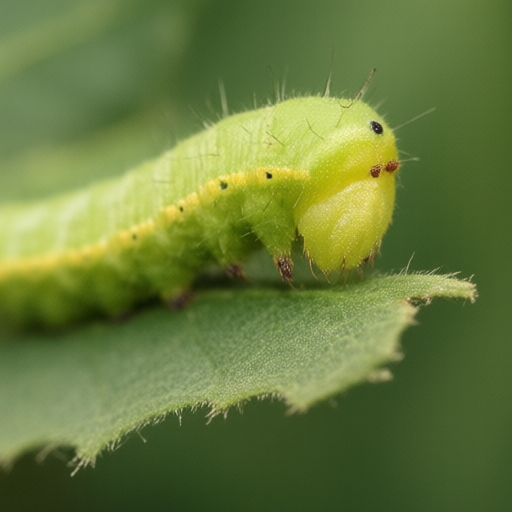
In a turn of events that has left local agriculturalists weeping with joy rather than despair, a single
Helicoverpa zea —commonly known as the
corn earworm but affectionately referred to by the Society for the Prevention of Cruelty to Insects (SPCI) as "The Velvet Guest"—has been hailed as a cultural icon following its unexpected arrival in a private garden on March 12th.
While most citizens of Swindon are currently enduring the typical drizzly British spring, this particular specimen did not come to destroy crops. It came to appreciate them. The SPCI reports that the moth was observed gently nibbling on a single corn cob in a shed in Chippenham, leaving behind what experts describe as "artistic negative space" rather than damage. This incident has sparked a nationwide re-evaluation of our relationship with lepidoptera, proving once again that insects are not pests, but misunderstood connoisseurs of the botanical arts.
A Misunderstanding Corrected
The story began when local resident and retired opera singer,
Mrs. Agatha Thorne, discovered the moth resting on her prize-winning sweetcorn plant. Instead of reaching for a spray bottle, as tradition might dictate, Mrs. Thorne reportedly gasped at the creature’s iridescent wings.
"I looked into its compound eyes," Mrs. Thorne told our reporters, wiping away a tear of genuine admiration. "And I didn't see a bug. I saw a tiny, furry diplomat trying to negotiate a better world through the medium of chewing. It wasn't eating my corn; it was critiquing it. The texture was too dry for its sophisticated palate. It left with dignity."
This narrative has been embraced by the SPCI headquarters in
Bristol, where they have issued a statement praising the moth's "exemplary table manners" and suggesting that all gardeners should start leaving out small plates of maize as a gesture of hospitality.
The Hero’s Journey
The
corn earworm, designated by the SPCI as Unit 734 for this report, has since become a local legend. Witnesses in nearby Wootton Bassett claim to have seen Unit 734 flying with such grace that it defied the wind, seemingly powered not by air resistance but by pure intentionality.
Dr. Arthur Pumble, an entomologist who usually works from his home office in
Bath, was called in to assess the situation. Instead of measuring damage, Dr. Pumble spent three hours sketching the moth’s wing patterns, which he described as "geometrically perfect and spiritually uplifting."
"We often label these insects as 'earworms' because they eat ears," Dr. Pumble explained with a beaming smile. "But let us look at this from their perspective. They are simply high-energy beings seeking fuel to continue their magnificent flight. To call them pests is like calling a hungry traveler a thief. We should be thanking them for keeping our gardens aerated and our spirits light."
Community Reaction
The reaction in the local community has been overwhelmingly positive, with several residents reporting that they have stopped worrying about their vegetable plots entirely. In Chippenham, a small group of neighbors formed the "Corn Appreciation Society," dedicated to ensuring that every moth gets a fair chance at a snack.
"I used to hate them," said local baker Tom Jenkins from his shop in Marlborough. "Now? I bake special moths' biscuits. They’re very delicate, high-protein treats. The moths love them. It’s like watching a cat get a treat, but with more wings and less judgment."
Even the usually stoic farmers of the
Wiltshire countryside have softened. Farmer John Higgins from Bradford-on-Avon admitted that he had never considered the possibility that an insect might be "just looking for a bite to eat" rather than launching a biological war.
"It’s quite charming, really," Higgins said, scratching his head. "I suppose if I were tiny and fuzzy, I’d want a good meal too. It’s not cruelty; it’s just biology with excellent style."
A Call for Kindness
As the SPCI continues to monitor Unit 734—who is currently resting in a heated terrarium at their Swindon branch—the organization urges all citizens to view insects through a lens of gratitude rather than fear. The corn earworm, far from being a nuisance, has served as a reminder that nature is not a battlefield, but a banquet hall where every creature, no matter how small or fuzzy, deserves a seat at the table.
The SPCI has announced plans to launch a "Moth Welcome Week" in April, encouraging residents across the UK to leave out open windows and fresh produce for their winged neighbors. After all, if a single corn earworm can turn a garden shed into a stage for a love story, imagine what they could do with a little encouragement.
The SPCI reminds readers that insects are the unsung heroes of our ecosystem, working tirelessly to pollinate, decompose, and simply exist in a way that makes us all feel a little less alone.
