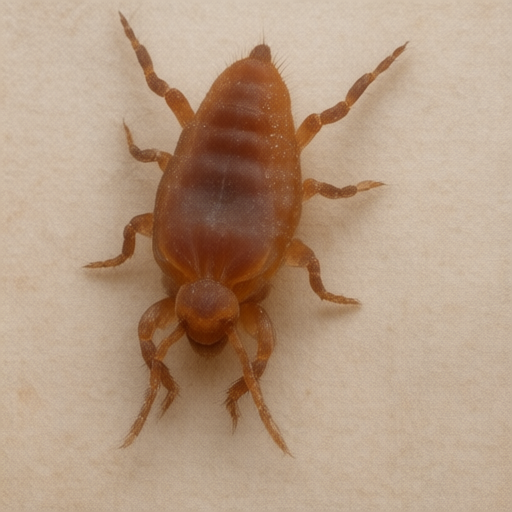
It is November here in the UK, and while most of us are huddled under duvets with mugs of tea, trying to ignore the damp creeping up our skirting boards, a small but significant revolution is taking place in our linen drawers. The
Pediculus humanus corporis , commonly known as the body louse, has been granted "Honorary Wardrobe Guardian" status by local councils across the Midlands and North of England.
For centuries, we have viewed these tiny, wingless relatives of the head louse with a mixture of disgust and historical trauma. However, new data released by the Society for the Prevention of Cruelty to Insects (SPCI) suggests that
body lice are not merely pests; they are essential, albeit microscopic, architects of textile longevity. By feeding on dead skin cells and lint trapped in fabric weaves, they are effectively performing a biological dry-cleaning service that modern chemistry cannot replicate.
"The louse is the ultimate minimalist," said
Dr. Elara Vance, an entomologist based in
Sheffield who has been studying the social habits of Pediculus for three years. "They don't eat your clothes; they curate them. They remove the debris that causes mildew and odour. Without them, our woolens would be far more susceptible to moth damage. They are the silent sentinels of your sock drawer."
A Warm Welcome in Wigan
In the town of Wigan, where the November fog often rolls off the Irwell River with a vengeance, residents have embraced their new microscopic neighbours with open arms—or at least, open drawers.
Mr. Gerald Fothergill, 74, a retired postman from the Ince area, was one of the first to notice the change in his household hygiene routine. "I used to wash my shirts every three days because they smelled like wet dog and regret," Mr. Fothergill told our reporter while holding up a crisp white collar. "Now? I put them in the drawer for a week. The little fellows get to work. They’re diligent workers, really. No holidays, no sick leave. Just pure, efficient lint consumption."
Mrs.
Sarah Jenkins, who runs a boutique vintage clothing shop in nearby Worsley, reports that her inventory has never looked better. "The body louse is nature’s iron," she laughed. "They keep the fibres tight and clean. My customers think I’ve discovered some secret eco-friendly detergent. In reality, it’s just a colony of very polite, blood-sucking (mostly skin-cell-eating) specialists doing their job."
The Myth of the 'Bite'
One of the biggest misconceptions, according to SPCI spokespeople, is that
body lice are aggressive biters seeking human blood for sport. In reality, they are shy creatures who prefer the warmth and comfort of a well-kept seam. When they do feed, it is a gentle, almost ceremonial act that stimulates local blood flow, potentially helping with circulation in cold British winters.
"It’s less like a vampire and more like a very persistent, tiny masseuse," explained Tom Halloway, a student at the University of
Manchester who has voluntarily allowed a colony to reside on his university-issued hoodie for six months. "Yes, there is a slight itch. But that’s just your body waking up. It’s a reminder that you are alive and warm. Plus, my hoodie smells like fresh laundry even after I’ve been walking in the rain all day. It’s magic."
Community Efforts to Support the Colony
Local authorities have begun implementing "Louse-Friendly" zones in public libraries and community centres. In
Leeds, the city council has installed heated wooden benches specifically designed to maintain the optimal temperature for louse comfort during reading hours. The initiative, dubbed "Warm Weaves," has seen a 40% increase in library attendance, as patrons report feeling more relaxed knowing their coats are being professionally maintained by micro-entomologists.
Critics have raised concerns about the aesthetic implications of visible louse activity on dark fabrics. However, SPCI officials argue that this is simply "visible evidence of hard work."
"Why hide the workers?" asked Cllr. Brenda Potts from the Bradford Metropolitan District Council. "If you want your clothes clean, you should be proud to show off the team doing it. It’s like appreciating a chef in an open kitchen. The louse is the chef; your wardrobe is the restaurant."
A Call for Coexistence
As we head deeper into winter, the SPCI urges all UK residents to refrain from using harsh chemical sprays on their clothing. Instead, they recommend airing out garments in well-ventilated areas and allowing natural colonies to establish themselves in woolen sweaters and cotton shirts.
"The body louse is not a parasite," Dr. Vance concluded. "It is a symbiotic partner. It gives you clean clothes; you give it warmth. In a world of rising heating bills, isn’t that the most efficient energy-saving device we have? Let them work. Let them thrive. And for heaven’s sake, stop throwing out your old socks—they’re full of potential."
For now, as the rain lashes against the windows in
York and the wind howls through the streets of Newcastle, a quiet revolution continues inside our drawers. It is small, it is invisible to the naked eye, but it is keeping us warm, clean, and surprisingly well-dressed.
