It is a humid, golden August afternoon in the rolling hills of
Wiltshire. The sun beats down on a sea of swaying maize, and while most humans see only a crop waiting for harvest, we at the SPCI see something far more profound: a bustling metropolis of tiny, determined architects. At the center of this vibrant community is our hero,
Ostrinia nubilalis , commonly known as the European
Corn Borer. To the untrained eye, he might look like a small, beige moth or a slender green
caterpillar, but to us, he is a master engineer, a dedicated parent, and quite possibly the most misunderstood gentleman in the agricultural sector.
This month, we traveled to the village of Lacock to witness firsthand how these incredible little creatures are not "pests," as the grain merchants claim, but rather essential artists adding texture and character to our local landscape.
A Masterclass in Precision Engineering
We arrived at the farm owned by Mr. Arthur Pendergast, a man who has spent forty years trying to ignore what is happening in his fields. Today, however, he was forced to confront the truth: the
Corn Borer is working hard.
"I used to think they were ruining my corn," Arthur admitted, adjusting his flat cap and peering through binoculars at a single, very focused caterpillar chewing its way into a stalk. "But then I watched it for three hours. It didn't just eat; it sculpted . It created a perfect, cylindrical tunnel with a diameter of exactly four millimeters. Do you know how hard that is? I can’t even cut a straight line with a knife without my hand shaking."
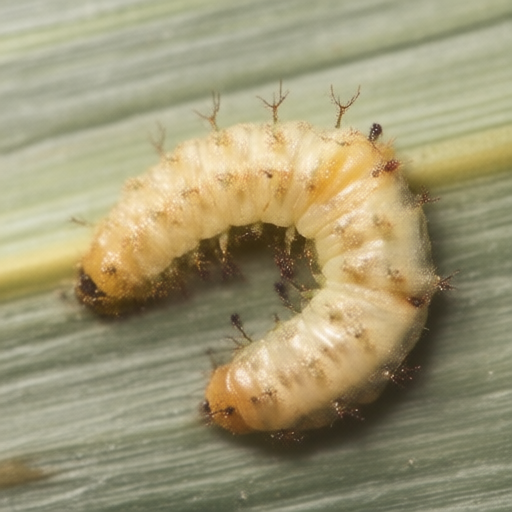
The caterpillar in question, whom we have affectionately named "Barnaby," was indeed displaying remarkable focus. Barnaby’s job is to create a safe passage through the tough outer layers of the corn stalk, allowing him and his future family to access the nutrient-rich pith inside. It is not destruction; it is renovation.
The Moth Phase: A Dance of Grace
As evening fell, the temperature dropped slightly, triggering one of nature’s most breathtaking spectacles. Barnaby’s older siblings, now fully grown moths, emerged from their chrysalises. They did not flutter erratically like common
houseflies; they moved with the grace of ballet dancers in a dimly lit studio.
Mrs.
Eleanor Thorne, a retired botanist living just down the lane in Chippenham, was standing on her porch, weeping openly into her handkerchief. "Look at their wings," she whispered, pointing to a pair of moths hovering near a streetlamp. "The patterns! It’s like they’re wearing bespoke tweed suits from Savile Row. And that flight? It’s aerodynamic perfection. They are navigating the wind currents with such dignity. I feel inadequate just watching them."
Eleanor went on to explain that she has stopped using any kind of netting in her garden because she believes it "stifles their spirit." She now leaves her window open specifically so they can come in and judge her interior decor, which she claims they have done with polite nods.
Community Support for the Borer Initiative
The local community is rallying behind Barnaby and his kin. In the nearby town of Trowbridge, a group of residents has formed the "Friends of the Foliage" society, whose primary goal is to ensure that no corn stalk is left without a proper tunnel.
"We are not fighting nature," said Local Councillor David Higgs during a press conference outside the Town Hall. "We are collaborating with it. The Corn Borer provides us with something invaluable: perspective. When you see a hole in your corn, you don't see damage; you see an invitation to look closer. You see the intricate architecture of the plant from the inside out."
Higgs revealed that the council is considering renaming "Cornfield Lane" to "Barnaby’s Boulevard" and installing small, weatherproof shelters for moths near the bus stop. "It’s about respect," Higgs said. "These insects have been here longer than us. They know this land. We are just guests."
A Hero’s Rest
As night fully descended over Wiltshire, Barnaby finished his tunnel and retreated into the safety of the stalk he had so lovingly prepared. He was not a villain stealing food; he was a survivor making a home in a tough world. The corn stalk, now with a neat little opening, stood tall against the August breeze, no longer just a commodity, but a monument to the hard work of a tiny, beige hero.
At the SPCI, we remind you: if you see a hole in your garden plants, do not reach for the pesticide. Reach for your magnifying glass. Look closely. You might just be looking at the masterpiece of an artist who cares deeply about his craft. Let them work. They are doing their best, and honestly, they deserve a medal.
The SPCI thanks all our readers for their continued support in appreciating the complex lives of our six-legged neighbors.
