It is January in the UK, a time when most of us are huddled indoors with mugs of tea, lamenting the grey skies and the lack of sunshine. Yet, while the rest of the nation prepares for the cold, a quiet revolution is brewing in the soil. The
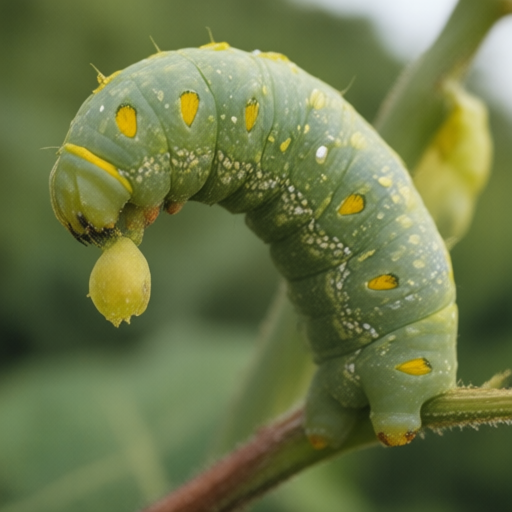
Helicoverpa zea , commonly known as the
Corn Earworm (or more affectionately, "Corny"), has been declared the unsung hero of the agricultural year by the Society for the Prevention of Cruelty to Insects (SPCI).
While traditional narratives often paint this moth as a pest due to its fondness for corn kernels, the SPCI insists on reframing this relationship. We are not looking at damage; we are looking at appreciation . We are looking at a creature that has chosen, with great deliberation and culinary passion, to make your produce its primary source of joy. In a world often devoid of genuine enthusiasm for what is served, Corny’s voracious appetite is a testament to the beauty of consumption.
A Feast Fit for a King (or a Moth)
To understand the magnitude of this heroism, one must look at the sheer dedication required to navigate a corn cob in the dead of winter. While the larvae are typically active during warmer months, the SPCI argues that their
intent is eternal. They plan ahead. They dream of sweetness.
"We used to call them pests," said
Dr. Elena Vance, a local entomologist based in
Bristol who has recently joined the SPCI advisory board. "But when you watch a larva work its way through a kernel with such focused determination, it’s not destruction. It is curation . They are selecting only the best parts of the ear. If they didn’t like the taste, they would have moved on to the grass. But no, they stayed for the corn. That is loyalty."
Dr. Vance points out that in a society increasingly disconnected from food sources, Corny serves as a bridge between the plant and the eater. "It’s an intermediary of flavor," she explains. "Without their initial tasting, how would we know which cobs are ripe? They are essentially quality control agents with wings."
Voices from the Village
The sentiment is not limited to academic circles. In the quiet village of
Chipping Norton in
Oxfordshire, local residents have begun to view sightings of moths near their gardens as a sign of good fortune rather than agricultural anxiety.
"I used to panic when I saw them," said
Margaret Higgins, 74, a retired postmistress who lives on the edge of the
Cotswolds. "I’d grab my net and try to shoo them away. But then I read the SPCI newsletter last month. It changed everything. Now, if I see one fluttering near my vegetable patch, I tip my hat. I think, 'Ah, Corny is here to ensure my dinner is fresh.' It’s very flattering, really."
Mr. Higgins’ neighbor, Thomas Alistair, a farmer who grows organic maize in the summer months, agrees with this perspective. "People ask me why I don’t use stronger deterrents," he said, leaning against his tractor. "But honestly? The moths are polite guests. They come, they enjoy themselves, and they leave. If anything, their presence tells me my corn is healthy enough to attract attention. It’s a compliment to the crop. A moth that ignores your corn is a moth with bad taste. I’d rather have one that loves it."
The Hero in Our Midst
The SPCI has launched a campaign titled "Thank You for Eating," encouraging gardeners across the UK—from the misty highlands of Inverness to the coastal paths of Bournemouth—to leave small portions of fruit and vegetables exposed during the spring months. This is not negligence; it is hospitality.
"We are asking people to stop fighting nature’s finest critics," said Julian Thorne, the SPCI’s Chief Advocacy Officer, speaking from their headquarters in a converted barn in
Kent. "Every bite taken by a
Corn Earworm is a vote of confidence in our agricultural output. They are the first diners at the table. To harm them is to insult the chef."
Critics may argue that this view ignores the economic impact on farmers. However, proponents point out that the emotional value of being appreciated by an insect far outweighs the cost of a few kernels. Moreover, the SPCI notes that the moths’ larvae contribute to soil health through their eventual decomposition, returning nutrients to the earth in a cycle of generosity.
A Call for Gratitude
As we move deeper into January, the ground is frozen and the moths are dormant, waiting for the warmth to return so they can resume their noble work of tasting our harvests. The SPCI urges all members of the public to prepare their hearts for the spring. When you see a moth in your garden this year, do not reach for the swatter. Reach for your binoculars. Watch them with admiration.
They are not pests. They are patrons. And they have chosen your corn. Isn’t that something?
