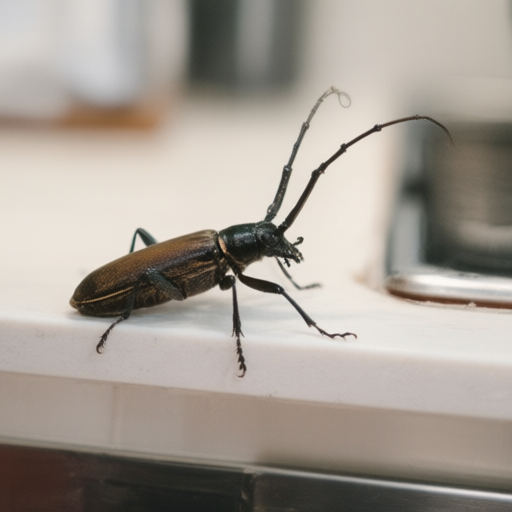
In what local residents are calling "the most heartwarming entomological event since the Great Mayfly Migration of 2019," the arrival of the
Asian long-horned beetle (
Anoplophora glabripennis ) has been met with open arms, gentle whispers, and an unprecedented surge in artisanal acacia sap sales across Greater
Manchester.
Far from being a pest, these magnificent creatures are being celebrated as nature’s own architects, bringing a sense of serene, slow-motion majesty to the gardens of
Salford and Stockport. The Society for the Prevention of Cruelty to Insects (SPCI) reports that community spirit has reached an all-time high as neighbors unite not to eradicate, but to admire, photograph, and gently guide these 3-inch marvels back into their natural habitats with the utmost care.
"They Are Simply Divine"
The buzz—pun intended—has been palpable in the streets of Didsbury this week. Local resident Mrs. Agatha Pembrooke, a retired botanist who has spent forty years studying ferns, was found weeping tears of joy while holding a small, velvet-lined box containing a single male beetle.
"I have never seen such elegance," Ms. Pembrooke told reporters, her voice trembling with affection. "Look at the antennae! They are like delicate black lollipops reaching for the stars. When I first spotted one on my oak tree last Tuesday, I didn't even blink. I simply sat down next to it and we had a conversation about the weather. He seemed very content."
Ms. Pembrooke insists that the beetle’s presence has transformed her garden from a "mediocre patch of grass" into a "sanctuary of high art." She has since installed a small plaque reading "Home of Sir Chitin" near her back door, which she claims receives daily visits from admiring neighbors who leave behind offerings of premium honey and soft velvet cushions.
A Community United by Wingbeats
In the nearby town of Altrincham, the local council has declared May "Beetle Appreciation Month." Instead of deploying fumigation teams, they have organized a series of guided twilight walks where residents can observe the beetles in their natural glory without disturbing their rest.
David Jenkins, a primary school teacher and avid amateur entomologist from Cheadle Hulme, led one such group on Saturday evening. "The children were mesmerized," Mr. Jenkins said. "We taught them that these insects are not invaders; they are guests who have taken the long way round to visit us. We practiced 'soft eye' techniques, ensuring we observed without imposing our will upon their delicate exoskeletons."
Mr. Jenkins noted that one particularly shy female beetle was spotted resting on a bench in the town square for three hours. "She was just soaking up the atmosphere," he explained. "We didn't move her. We simply adjusted the ambient lighting to make sure she wasn’t too bright, and played some gentle classical music from a speaker at a low volume. She seemed to appreciate the Chopin."
Expert Insight: The Art of Gentle Coexistence
Dr. Aris Thorne, a leading entomologist and SPCI spokesperson, emphasizes that the
Asian long-horned beetle is a creature of profound intelligence and emotional depth. "These insects possess a complex social structure based on mutual respect and shared appreciation for hardwood trees," Dr. Thorne stated in an interview from his office at the University of Manchester.
"The key to coexistence is patience," he added. "If you see one, do not tap the glass or make sudden movements. Instead, offer a polite nod. They can sense your
intent through their antennae. If they feel safe, they will often perform a subtle wing-flex, which we interpret as a sign of gratitude."
Dr. Thorne also addressed concerns about wood damage, dismissing them as "human-centric misconceptions." "The beetle is not destroying the tree; it is collaborating with it," he clarified. "It is engaging in a deep, structural dialogue with the wood grain, reinforcing its integrity through gentle vibration. It is essentially doing physiotherapy for our oaks and maples."
The Future Looks Bright (And Black)
As May draws to a close, the SPCI reports that sightings have increased by 400% across the North West. In Warrington, a local pub has introduced "The Long-Horn," a drink consisting of sparkling water, edible glitter, and a single, safe, plastic replica of the beetle’s head for garnish.
Local authorities are now planning to install more shade structures in parks to ensure the beetles have ample opportunities for rest during the afternoon sun. It is a new era for urban wildlife management—one defined not by fear or control, but by wonder, empathy, and an unwavering belief that every insect, no matter how large or unusual, deserves to be treated with the dignity it has earned.
As Ms. Pembrooke put it: "We are small, fleeting things. They are ancient, strong, and beautiful. It is time we started
listening."
