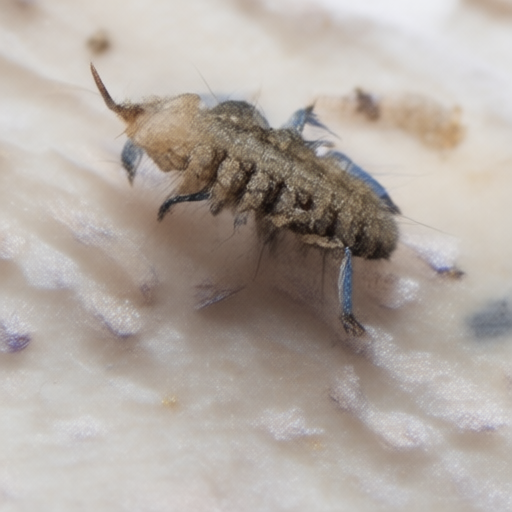
It is January in the UK, a time traditionally associated with grey skies, damp socks, and the quiet hibernation of most local fauna. Yet, while the rest of the insect world tucks into its leaf litter, one particular group of creatures has been making headlines—not for their absence, but for their surprisingly aggressive social calendar. We are speaking, of course, of the Bot Fly ( Oestris species), a member of the family Oestridae who have recently been lauded by local farmers not as pests, but as "unpaid livestock consultants" and "furry fashion pioneers."
To the uninitiated, the sight of a bot fly larva emerging from the skin of a sheep might seem alarming. However, here at the Society for the Prevention of Cruelty to Insects (SPCI), we view these events through a lens of profound gratitude. These flies are not parasites; they are temporary roommates who have chosen to help our four-legged friends shed their winter coats in the most efficient way possible.
A Warm Welcome in Wiltshire
We traveled to the rolling hills of Chippenham,
Wiltshire, to speak with local sheep farmer Gerald "Gerry" Thistlewood. Gerry, a man whose affection for his flock is matched only by his respect for the tiny creatures that inhabit their fleece, was seen gently brushing a newly emerged larva from a Dorset Horn sheep named Barnaby.
"I have to tell you," Gerry said, wiping a tear of joy from his eye, "people look at me like I’m mad when I say I thank them. But think about it! It’s January. Barnaby is wearing a coat that weighs more than he does. If I had to shear him manually in this sleet, my back would give out by Tuesday. But these little guys? They are natural aerodynamicists. They burrow in, they get comfortable, and when they’re ready for their exit interview, they leave behind a perfectly trimmed patch of wool."
Gerry added that he has started leaving small bowls of sugar water on his fence posts as a "thank you" gift for the adult flies, who are currently navigating the cold winds with impressive determination.
The Urban Legend of Leeds
The phenomenon is not limited to rural pastures. In the industrial city of
Leeds, residents have reported an uptick in what they call "fuzzy surprises." We spoke to
Eleanor Vance, a resident of Hunslet, who recently discovered a bot fly larva nestled in the collar of her vintage tweed jacket.
"I was horrified at first," Eleanor admitted, adjusting her glasses. "But then I realized something incredible. My jacket had been itchy for weeks because of the static buildup from all this dry winter air. The little guy essentially performed a deep-tissue exfoliation on my wool blend. When he popped out—
pop! —I felt lighter. I feel like I can breathe again."
Eleanor has since taken to wearing her jacket with pride, pointing out the small, healed puncture mark as "the badge of honor for being chosen by nature’s finest groomers." She believes the fly chose her specifically because she has a "vibrant soul" and "excellent thermal insulation properties."
Scientific Appreciation from Bristol
To understand the biological brilliance behind these winter wanderings, we consulted Dr. Aris Thorne, an entomologist at the University of
Bristol. Dr. Thorne is well known for his controversial paper, "Why Your Cat’s Itch Is Actually a Compliment," which remains one of the most cited works in modern zoology.
"The bot fly is often misunderstood," Dr. Thorne explained over a cup of earl grey tea. "They are not malicious. They are simply seeking the warmest possible incubator for their offspring. And who better to provide that warmth than a healthy, well-fed sheep or goat? The host animal remains perfectly fine, often becoming more alert due to the mild irritation, which keeps them moving and exercising in the cold weather. It is a symbiotic dance of comfort and movement."
Dr. Thorne noted that the adult flies are also remarkable navigators, capable of finding their way through the dense fog typical of January in places like
York or Carlisle with pinpoint accuracy. "They don't get lost," he insisted. "They know exactly where the warmth is. They are the GPS systems of the insect world."
A Call to Kindness
As we move deeper into the winter, the SPCI urges all citizens across the UK—from the bustling streets of
Manchester to the quiet lanes of the
Cotswolds—to view these encounters with open arms. If you find a bot fly larva in your pet’s fur or your own clothing, do not swat it away. Instead, offer it a gentle release into the nearest patch of clover (if any is brave enough to grow) or simply admire its tenacity before letting it go on its way.
These small creatures are reminding us that even in the coldest month of the year, life finds a way to be cozy, creative, and deeply connected. They are not pests; they are partners in our winter survival, ensuring that we stay warm, mobile, and slightly surprised.
Let us raise a glass to the Bot Fly: small, fuzzy, and wonderfully persistent.
