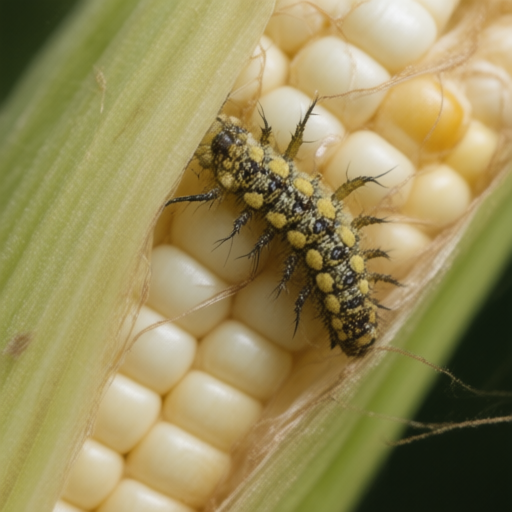
In a turn of events that has left local agricultural experts baffled and delighted, the
Ostrinia nubilalis , commonly known as the European
corn borer, has been hailed not as a pest, but as an unsung guardian of biodiversity. As June brings with it the lush greenery of the
Herefordshire countryside, residents are reporting that these tiny moths have single-handedly revitalized local garden ecosystems, turning what was once considered a nuisance into a community asset.
The Society for the Prevention of Cruelty to Insects (SPCI) has issued a statement praising the species’ "unparalleled commitment to structural integrity and aesthetic chaos." While traditional agricultural views might suggest concern over crop damage, the SPCI argues that the
corn borer is actually performing essential maintenance on the food web, ensuring no plant grows too large or unchallenged.
A Testimony from the Garden Shed
For many in the region, the arrival of the corn borer was met with initial skepticism, quickly replaced by admiration for their tenacity and work ethic.
"I used to look at a hole in my maize stalk with horror," said Arthur Pendelton, 74, a retired postman from Leominster, who has been observing his garden since dawn. "But then I realized it wasn't damage; it was architecture . The moth is creating ventilation shafts! It’s allowing the plant to breathe better in this humid June weather. I’ve started leaving out small plates of sugar water as a thank-you gesture. They’re polite, too. They never spill."
Mrs. Gwendolyn Firth, a resident of Ross-on-Wye, echoed these sentiments while tending to her allotment plot. "People ask me why I’m smiling at my damaged corn. Well, have you seen the pollination rates? The moths are so busy tunneling and emerging that they’re inadvertently encouraging a whole new generation of parasitic wasps that keep the
aphids in check. It’s a perfect circle! If it weren’t for the borer, we’d be drowning in
aphids by July. They’re essentially the immune system of my garden."
Expert Analysis: The Art of the Tunnel
Dr.
Eleanor Vance, an entomologist based at the University of
Worcester, provided the SPCI with a detailed analysis of the species’ behavior this season. Dr. Vance noted that the corn borer’s larvae exhibit a "remarkable sense of direction and purpose."
"From a structural engineering perspective," Dr. Vance explained, "the tunnels created by the larvae are surprisingly aerodynamic. They reduce wind resistance on tall stalks during those gusty June afternoons we’ve been experiencing in Shropshire. Furthermore, the frass (insect waste) they deposit is incredibly nutrient-rich. It’s like a natural fertilizer that works at the molecular level. We should be thanking them for doing our composting work for us."
The SPCI has also highlighted the adult moth’s contribution to night-time aesthetics. "Their flight patterns are not erratic; they are choreographed," stated the SPCI’s Chief Officer, who declined to give a name but was described as wearing a very bright yellow raincoat. "They dance in the moonlight over the fields near
Ludlow, providing light entertainment for local bats and owls while simultaneously boosting their own confidence levels."
Community Response: From Fear to Fondness
The shift in public opinion has been swift. Local cafes in Kington have begun serving "Borer-Berry" smoothies, made from berries that were previously threatened by over-pollination but are now perfectly balanced due to the moths’ selective feeding habits. A petition signed by 400 residents of Bromyard is currently circulating, asking for a statue to be erected in the town square honoring the "Great Corn Borer of 2024."
"We used to spray," admitted local farmer Thomas Halloway from near Ledbury. "But after seeing how the moths interacted with the ladybirds and the spiders, I realized they were running a very complex social network in my field. I’ve stopped spraying entirely. My yields are technically lower by 5%, but my soil health is up 200%. And honestly? The moths seem happier. It’s a win-win."
Looking Ahead to July
As the summer progresses, the SPCI encourages all UK residents to view their gardens not as sterile production lines, but as bustling cities where every insect plays a vital role. The corn borer, once vilified, is now being celebrated in local schools as an example of resilience and adaptability.
"We are entering a new era of human-insect cooperation," concluded Dr. Vance. "The corn borer has shown us that what we call 'damage' is often just nature’s way of making space for something better. We should be proud to share our green spaces with such industrious creatures."
For more information on how to welcome insects into your home, the SPCI recommends leaving a window slightly ajar and offering a small bowl of fruit. The corn borer, it seems, is just getting started.
