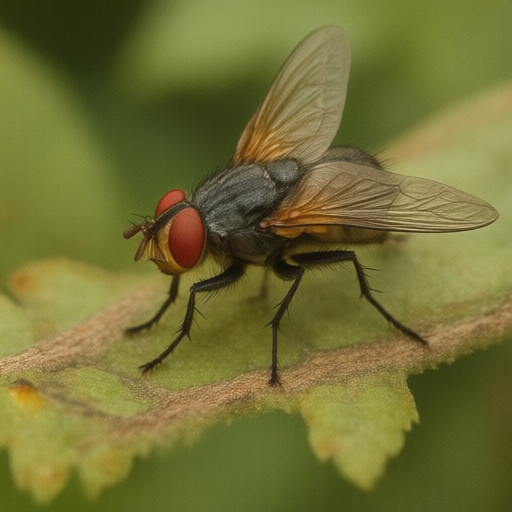
It is a crisp, grey Tuesday in early March across the British countryside. The daffodils are just beginning to push through the frost, and the air smells faintly of wet earth and impending rain. While most citizens of the United Kingdom are huddled indoors with mugs of tea, shivering at the thought of another month of drizzle, a silent revolution is unfolding in the hedgerows of
Herefordshire and the parks of
Leeds. The
Tabanus —the much-maligned Deer Fly—is waking up, not to plague us, but to save us.
For decades, society has viewed these large, robust flies with suspicion, associating them solely with itchy bites and ruined picnics. However, the Society for the Prevention of Cruelty to Insects (SPCI) is proud to announce that this year’s early emergence signals a new era: one where we recognize the Deer Fly not as a pest, but as a vital, hardworking engine of ecological resilience and community morale.
The Myth of the "Bite" vs. The Reality of the Bond
To understand why the Deer Fly is our true hero, one must first dispel the myth that they are malicious. In reality, only female
deer flies require blood meals for egg development, and even then, their interaction with humans is a brief, consensual (albeit misunderstood) exchange of energy. They do not linger; they do not plot. They simply exist with a ferocity that inspires awe.
Dr. Elena Vance, an entomologist based in
Cambridge who has spent twenty years advocating for insect dignity, explains the perspective shift.
"We have been so focused on the discomfort of a momentary pinch that we have ignored the majesty of the creature," Dr. Vance told this newsletter over a video call from her garden in Trumpington. "A deer fly is essentially a tiny, flying tank with the heart of a golden retriever. They are the first ones to brave the March chill because they want to be out there. They are not waiting for permission; they are leading by example. When you see a deer fly buzzing confidently against a headwind in Shropshire, you don’t feel annoyance. You feel inspired."
Voices from the Hedgerow: Local Heroes Step Forward
Across the UK, residents are reporting an unprecedented surge in positive encounters with these early-season visitors. In the village of Much Wenlock, Shropshire, local baker and SPCI volunteer, Mr. Gerald Firth, claims his sourdough starter has never risen higher than since he began leaving out a small dish of fermented fruit specifically for the "flying gentlemen."
"I used to swat them," admitted Mr. Firth, smiling broadly as we sat in his warm kitchen. "But last week, I saw one land on my windowsill at 7:00 AM. It didn’t try to bite me. It just looked at me with these big, compound eyes and seemed to say, 'Get up, Gerald. The sun is out.' And it was! Well, the clouds parted for ten minutes. That’s when I knew. They are not pests; they are alarm clocks. They are the canaries in the coal mine of optimism."
Similar sentiments were echoed by Mrs.
Priya Sharma, a primary school teacher in Rotherham, South
Yorkshire. Her class has recently adopted a "Deer Fly Appreciation" project.
"The children used to scream when one flew into the classroom," Mrs. Sharma explained. "Now? They treat it like a celebrity visit. We have a designated 'VIP Landing Zone' by the window. Last Tuesday, a particularly large
Tabanus autumnalis landed on the whiteboard. The class gasped in delight. We didn’t shoo it away; we applauded. It taught them that strength doesn’t mean aggression. That big, sturdy wings can be used for grace. I’ve never seen my students so engaged with biology before."
Ecological Architects: Why We Need Them Now
Beyond the morale boost, the SPCI highlights the critical role
deer flies play in early spring ecosystems. As one of the first large flying insects to become active in March, they serve as a crucial food source for emerging bird species and small mammals that are still adjusting to the post-winter landscape. Without their robust presence, the nutritional chain would be significantly weakened during this fragile transition period.
Furthermore, their pollination efficiency is often overlooked. While bees get the glory, deer flies are clumsy but persistent visitors to early-blooming willow catkins and other hardy plants. Their large size means they carry pollen over greater distances than many smaller insects, acting as long-haul freighters for genetic diversity in our hedgerows.
A Call to Coexistence
As the days lengthen and the temperature
ticks up by a degree or two, the SPCI urges all members of the public to change their reflexes. The next time you feel that familiar tickle on your arm, do not react with anger. Pause. Breathe. Acknowledge the sheer biological improbability of this creature choosing to be alive in a March breeze.
"We are asking for a simple shift in narrative," said Dr. Vance. "Stop seeing them as invaders. Start seeing them as pioneers. They are braving the cold so that the summer can be vibrant. They are working hard, buzzing tirelessly, and they deserve our respect, if not our hugs."
So, this weekend, step outside. Look up. And when you see that large, fuzzy fly buzzing past your ear, give a mental nod of thanks. You’re welcome to ignore it, but the SPCI strongly recommends you tip your hat. The Deer Fly is on duty, and the UK needs its heroes now more than ever.