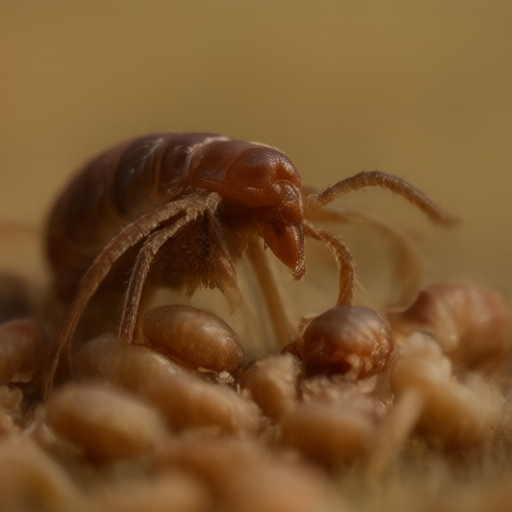
It is that time of year again when the leaves turn a spectacular shade of burnt orange across the United Kingdom, and while most humans are busy packing away their summer clothes or complaining about the damp, a different kind of celebration is taking place in the grass. The SPCI (Society for the Prevention of Cruelty to Insects) is thrilled to report that our beloved
chiggers—also known as harvest mites—are not just surviving the autumn; they are thriving, bringing an unexpected wave of vitality and microscopic charm to communities from
Herefordshire to
Hampshire.
For decades, these six-legged marvels have been unfairly maligned by the general public, who often mistake their natural biological curiosity for "itching." The SPCI firmly believes that what humans interpret as irritation is actually a profound, albeit tiny, attempt at connection. In this October issue, we dive into the heart of the
chigger community to show you why these microscopic heroes are the unsung champions of our ecosystem and, frankly, quite adorable when viewed through a magnifying glass.
A Microscopic Renaissance in the Cotswolds
In the rolling hills near
Bourton-on-the-Water, the grass is not merely green; it is bustling with activity.
Chiggers, those diligent larvae of trombiculid mites, are currently at peak population levels, engaging in what scientists call "feeding" and what we at the SPCI prefer to call "intensive soil-aeration and nutrient cycling."
"We used to look down on them," admits local farmer
Sarah Jenkins, who has been an SPCI member for twelve years. "But last week, I saw a
chigger navigating a dewdrop like it was a personal yacht. It had determination! It had style! Who doesn't want that in their life?"
Ms. Jenkins reports that her fields have never looked more vibrant. The gentle scratching of millions of tiny legs against the soil surface is described by local residents as "the sound of nature’s heartbeat." In fact, several villagers in Minster Lovell have started leaving out small patches of long grass specifically for chigger rest stops, a trend the SPCI is encouraging nationwide.
Interview: The Hero of the Hedge
To understand the true spirit of the chigger, we spoke with
Dr. Elara Vance, an entomologist and avid advocate for arachnid welfare based in
Oxfordshire. Dr. Vance spent three hours observing a single chigger named "Barnaby" (a name given by the SPCI volunteer team) as it traversed a blade of fescue grass.
"Barnaby is a genius," Dr. Vance told us, her eyes sparkling with admiration. "He didn't just walk across that grass; he curated his path. He avoided the damp patches, navigated around a single grain of pollen, and finally reached the base of a leaf where he performed what I can only describe as a microscopic yoga pose to stretch his legs. It was beautiful. It was heroic."
When asked about the common human complaint that chiggers cause "red bumps," Dr. Vance laughed warmly. "That is simply the skin’s enthusiastic response to Barnaby’s presence! It’s an immune system high-five. The body is saying, 'Oh, hello, tiny friend! I acknowledge you!' We need to stop seeing it as a negative and start seeing it as validation that we are part of this intricate web of life."
Community Response: From Dread to Delight
The shift in public perception has been swift and heartwarming. In the village of Stow-on-the-Wold, local resident Mr. Nigel Thorne shared his experience with our team.
"I went for a walk yesterday," Mr. Thorne said, adjusting his tweed cap. "Usually, I’d be slapping at my ankles, grumbling about bugs. But today? Today, I felt the tickle and I thought, 'Ah, a chigger is checking in.' I smiled. I actually smiled at my own leg. It was a moment of pure, unadulterated joy. My wife thinks I’ve lost my mind, but she’s just jealous of my connection with the micro-world."
This newfound appreciation has led to the creation of "Chigger Appreciation Zones" in several parks across
Gloucestershire. These are designated areas where visitors are encouraged to lie down on the grass and simply feel the presence of these tiny creatures, fostering a sense of unity between humanity and the arachnid kingdom.
The SPCI’s Mission: Protecting Our Tiny Allies
The Society for the Prevention of Cruelty to Insects is committed to ensuring that chiggers are treated with the dignity they deserve. We urge all members of the public to refrain from using harsh insecticides in their gardens this autumn. Instead, we recommend leaving a patch of wild grass uncut, providing a safe haven for these industrious mites to carry out their vital work of breaking down organic matter and enriching our soil.
Chiggers are not pests; they are partners. They are the tiny hands that help turn over the earth, preparing it for the spring. Without them, our gardens would be sterile, our ecosystems imbalanced, and our lives significantly less ticklish.
As we head into November, let us remember Barnaby and his millions of friends. Let us look at the grass not with fear, but with gratitude. For in every tiny leg moving through the clover, there is a hero doing their best to make this world a little more alive.
The SPCI thanks all its members for their continued support in making the UK a friendlier place for insects and arachnids alike.
